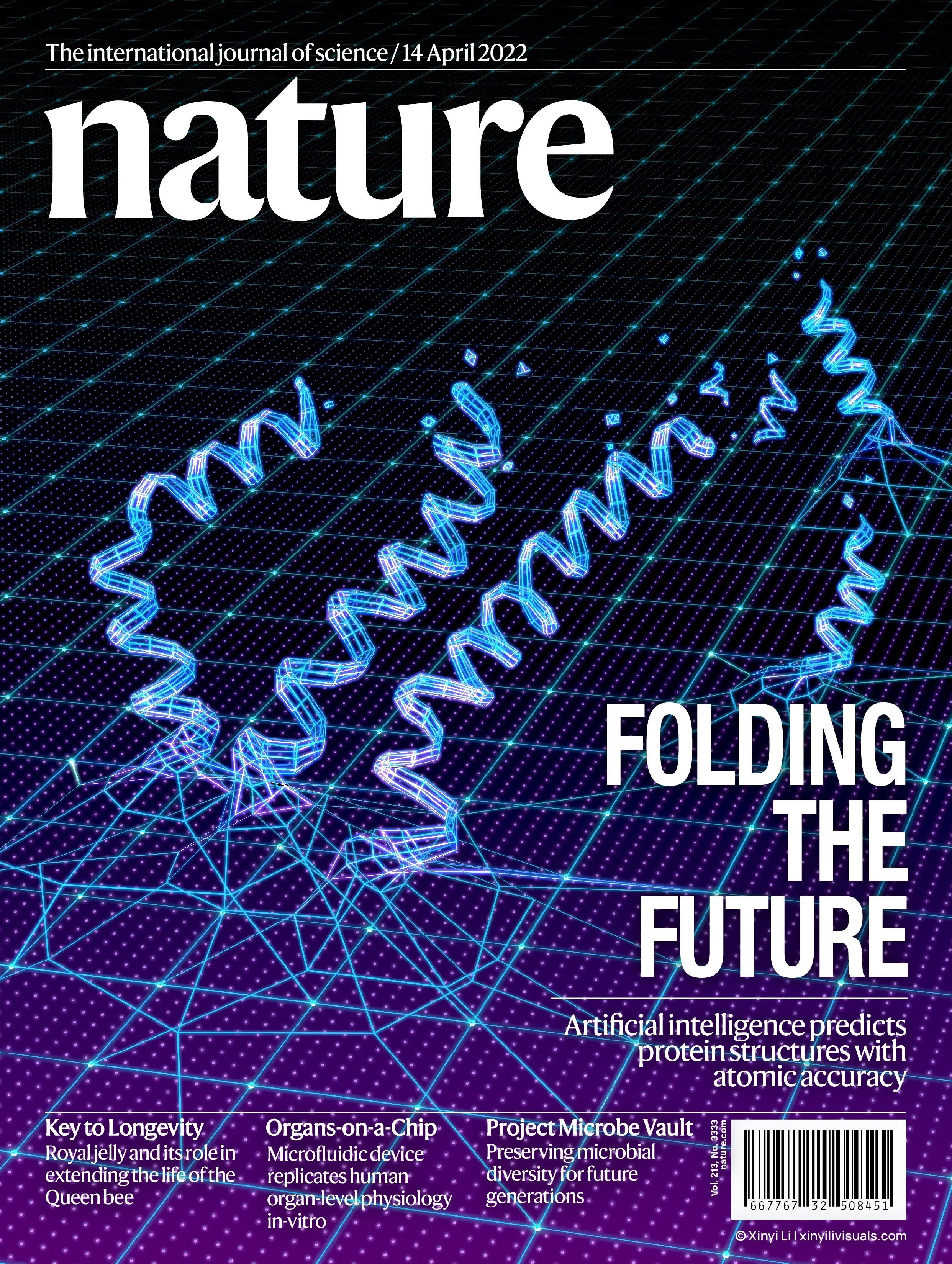
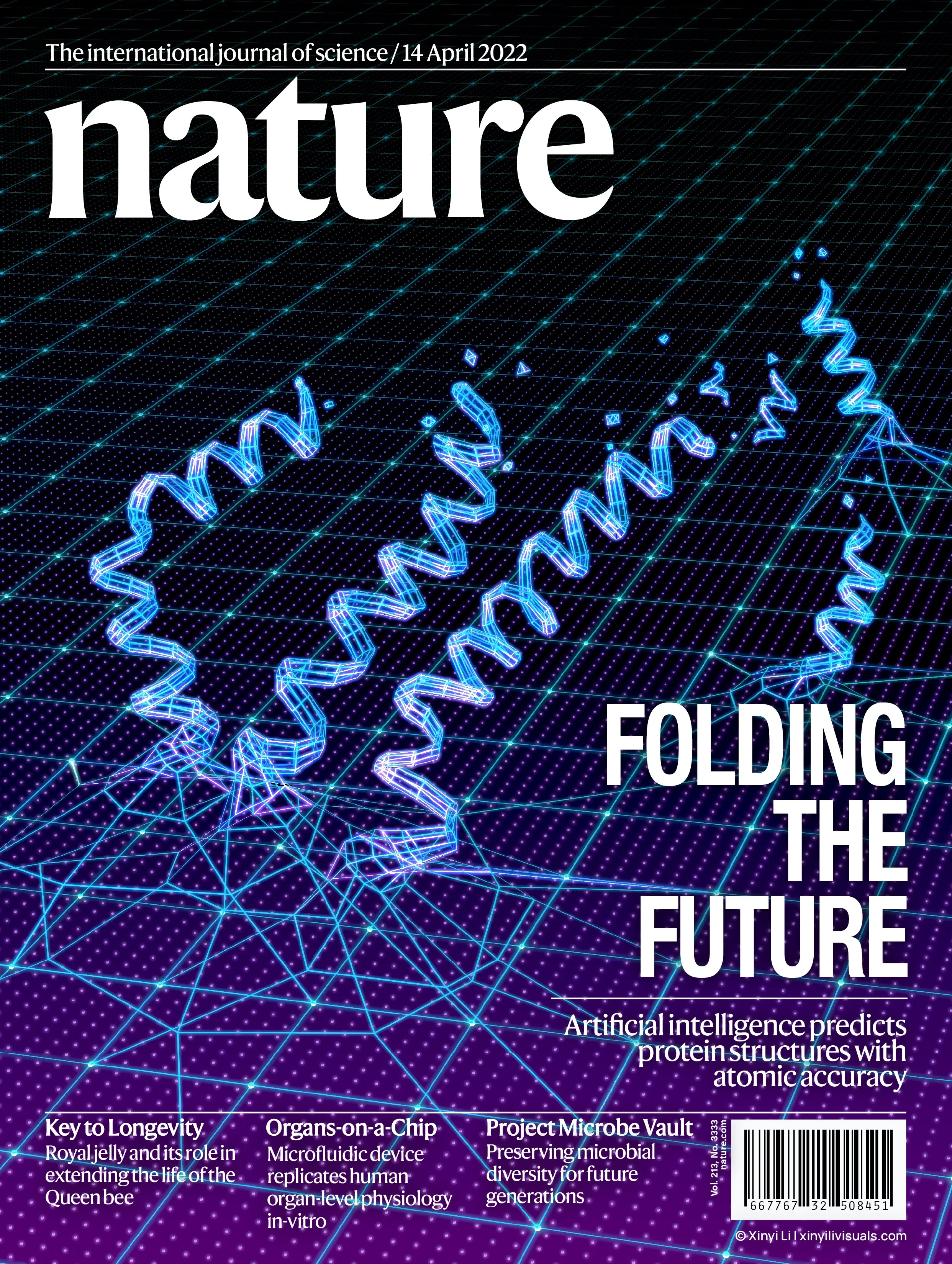
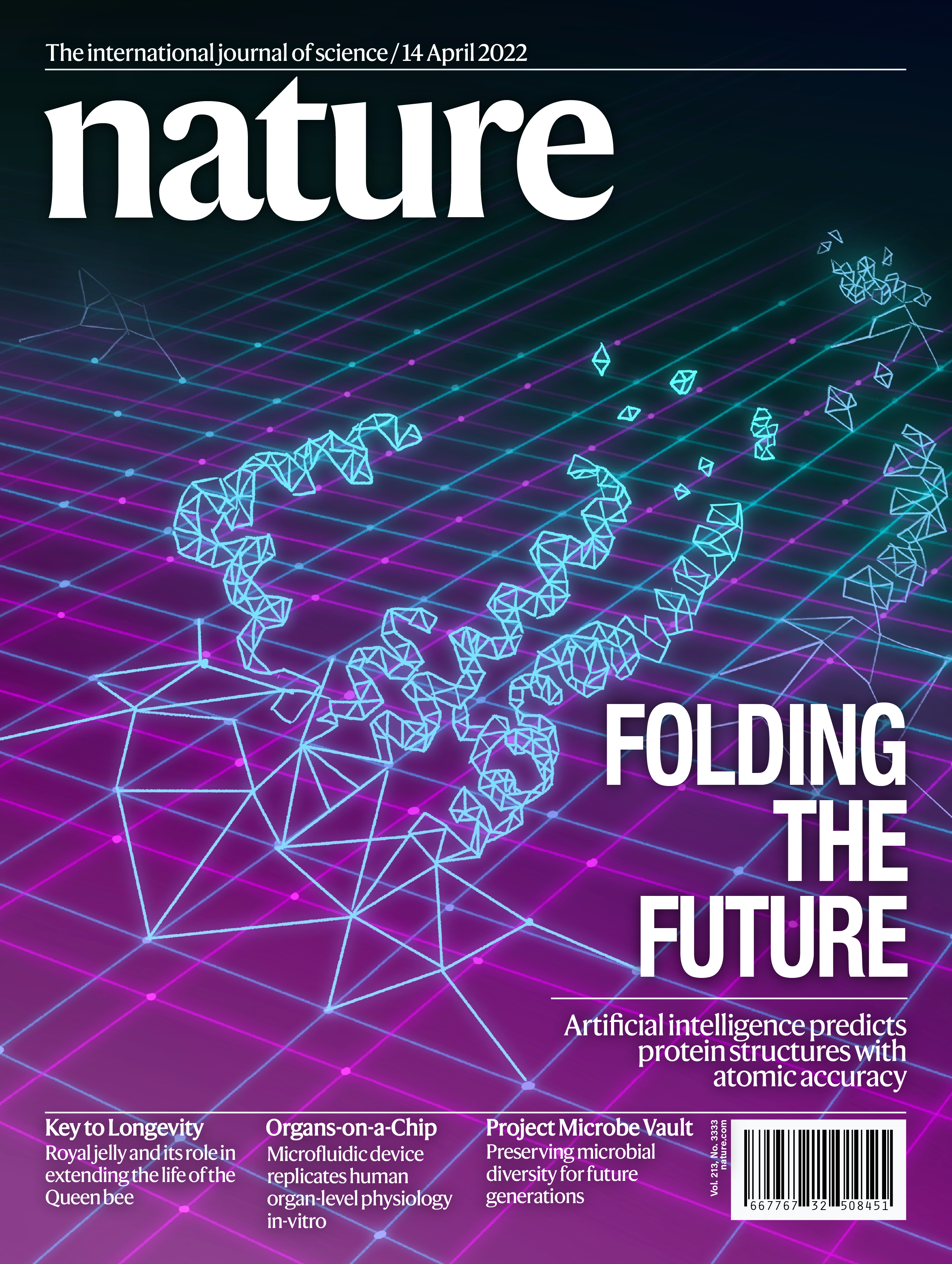
A mock journal cover for Nature magazine based on a Nature article on AlphaFold, a computational AI system developed by DeepMind that can predict protein structures with astonishing accuracy. When done accurately, protein structure prediction by AI and machine learning can unlock major advances in future scientific research.
Folding the Future
Editorial • 2022
Client
Stuart Jantzen
Software
Autodesk Maya
Adobe Photoshop
Adobe Illustrator
Format
Journal Cover
Process
The research process for this project began with the selection a scientific article and ideation of a visual metaphor that could serve as an eye-catching and striking editorial cover. I've always been interested in technology, especially the integration of technology into science and medicine, so naturally, I was drawn to publications about biotech which eventually led me to AlphaFold.
I liked the technological and sci-fi imagery that the topic evoked, and was keen on telling a visual narrative about the increasing impact of AI on scientific discovery. I began to ideate different compositions that included both protein structures and imagery of technology and computerized elements to represent AI.
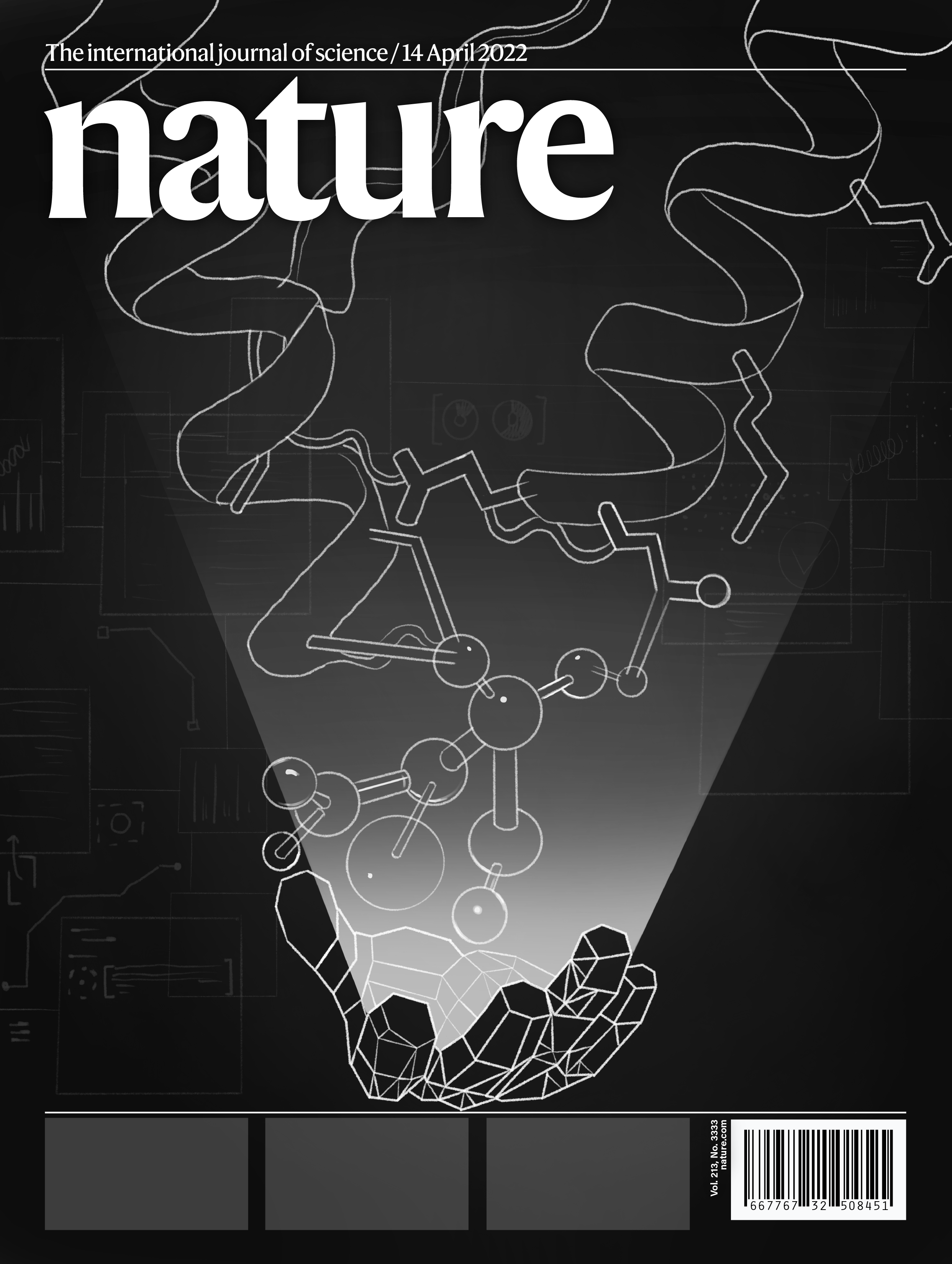
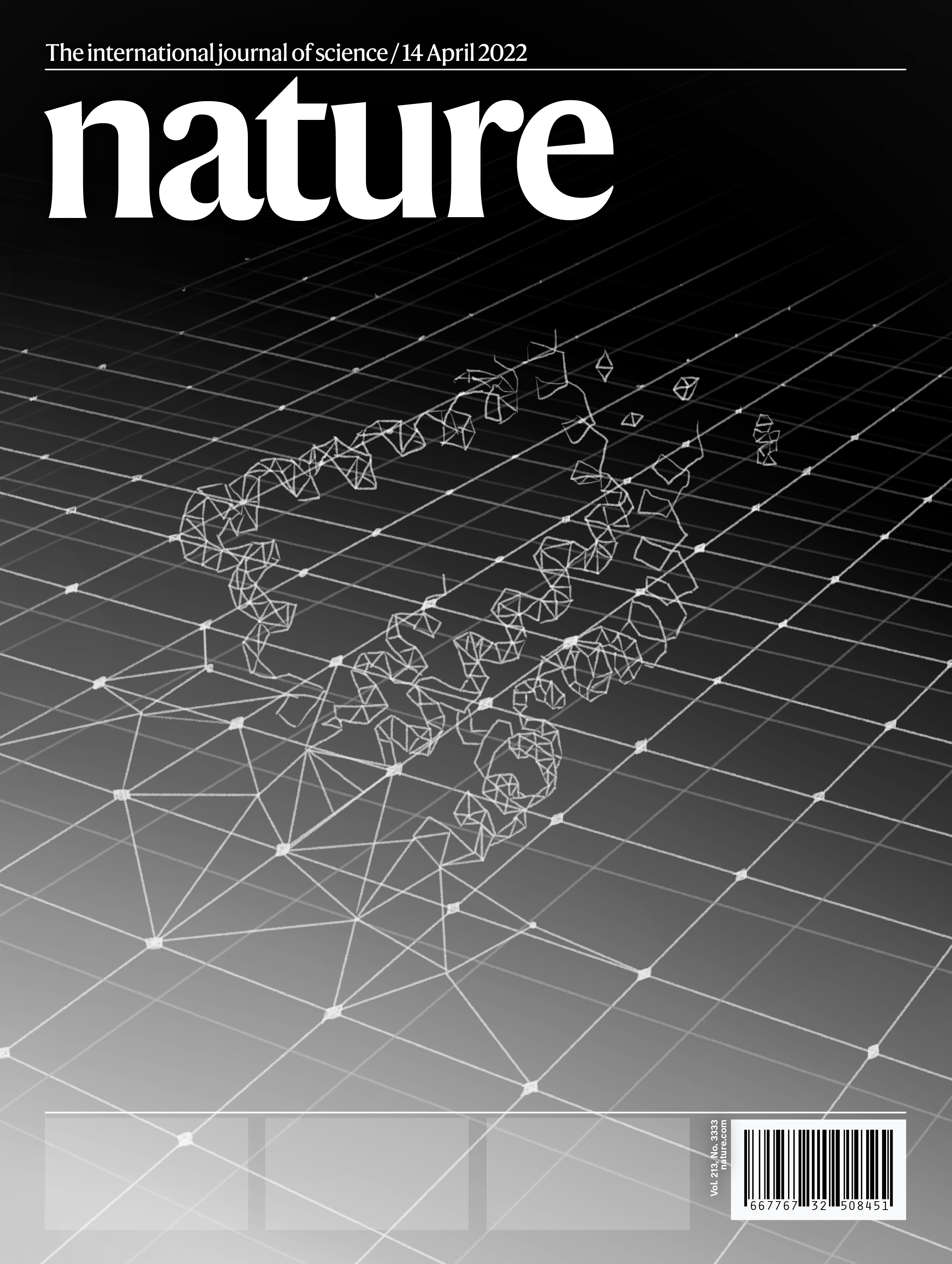
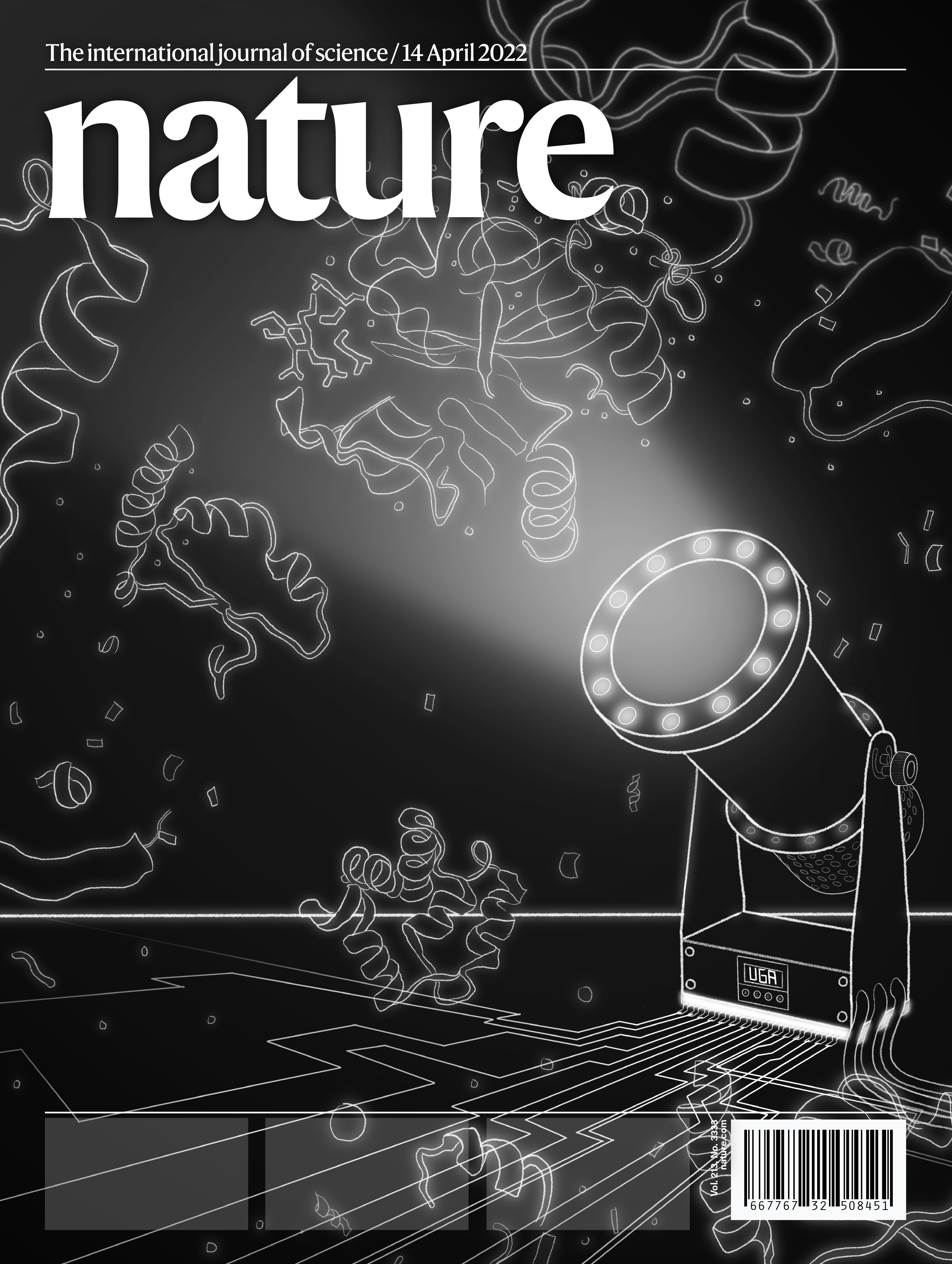
I played around with different ways to show the concept of AI, as it is more of an abstract concept that can be expressed visually in many ways. The first idea incorporated a wireframe hand to show the creation of proteins by AI, while the second idea involved a large wireframe plane with proteins folding out from it. The third idea was inspired by the ribbon structure of proteins being similar to confetti, which sparked the idea to create a scene of protein confetti, symbolizing the celebration of AlphaFold.
I chose to go forward with the second idea, as it incorporated the imagery of proteins and AI well, and allowed me to render the protein coils in a more futuristic style.
Comprehensive Sketch
Modelling
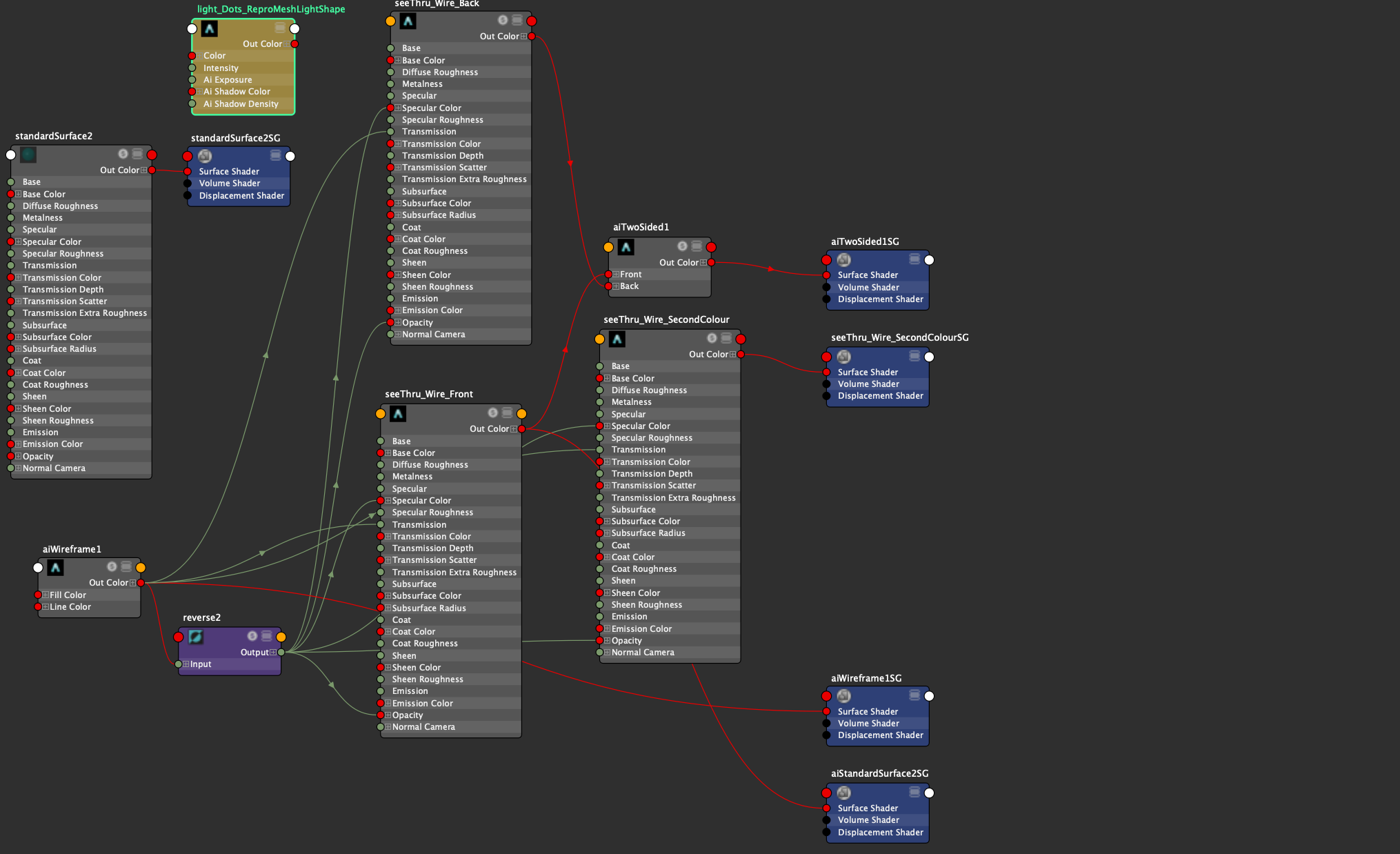
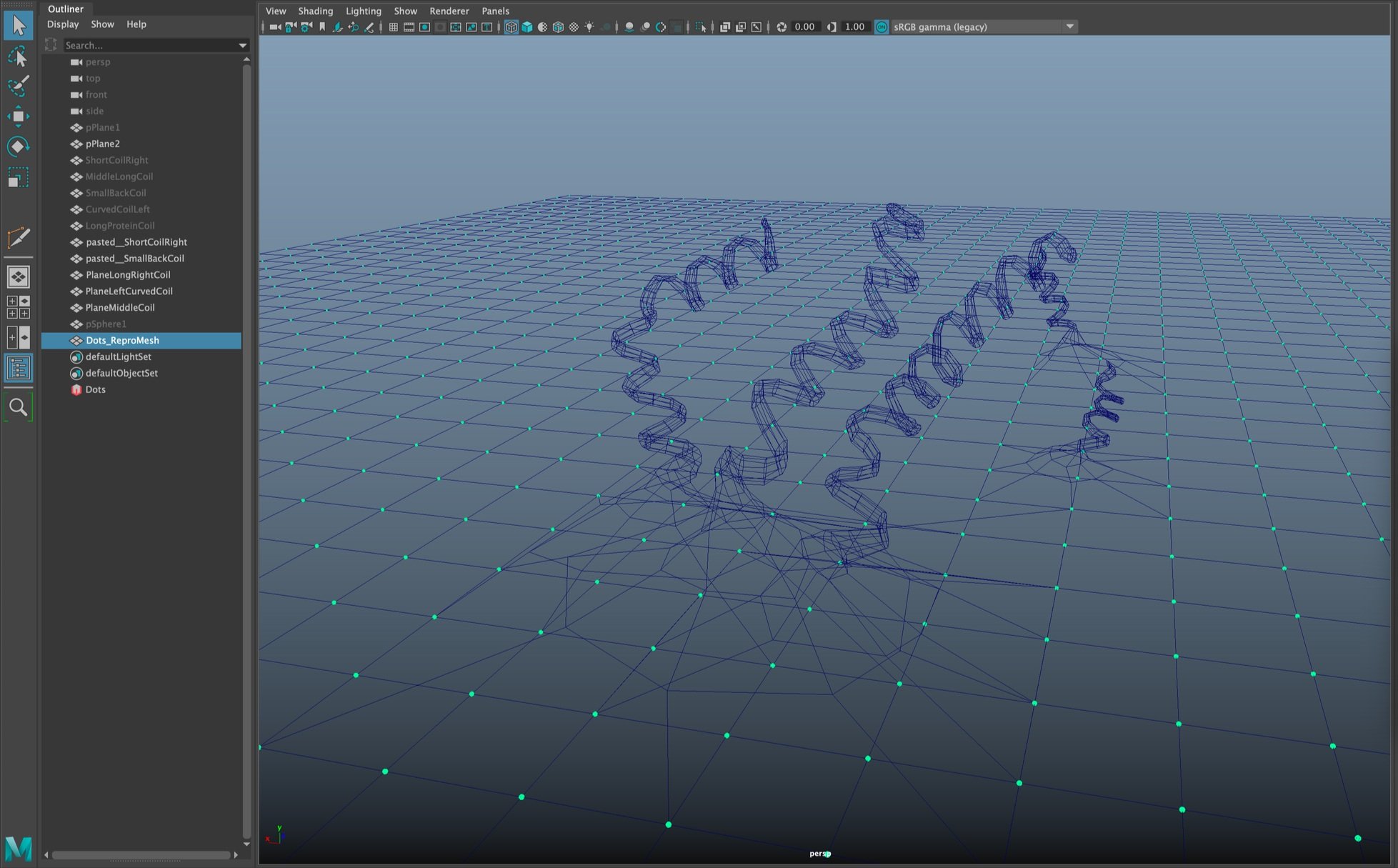
I modelled the protein coils based on the alpha helices of small proteins from Molecular Maya. In order to connect the coils to the plane below, I extruded the end of the protein helices and adjusted the mesh to overlap with points on the plane. I also created patterns using MASH to give the plane a more computerized look.
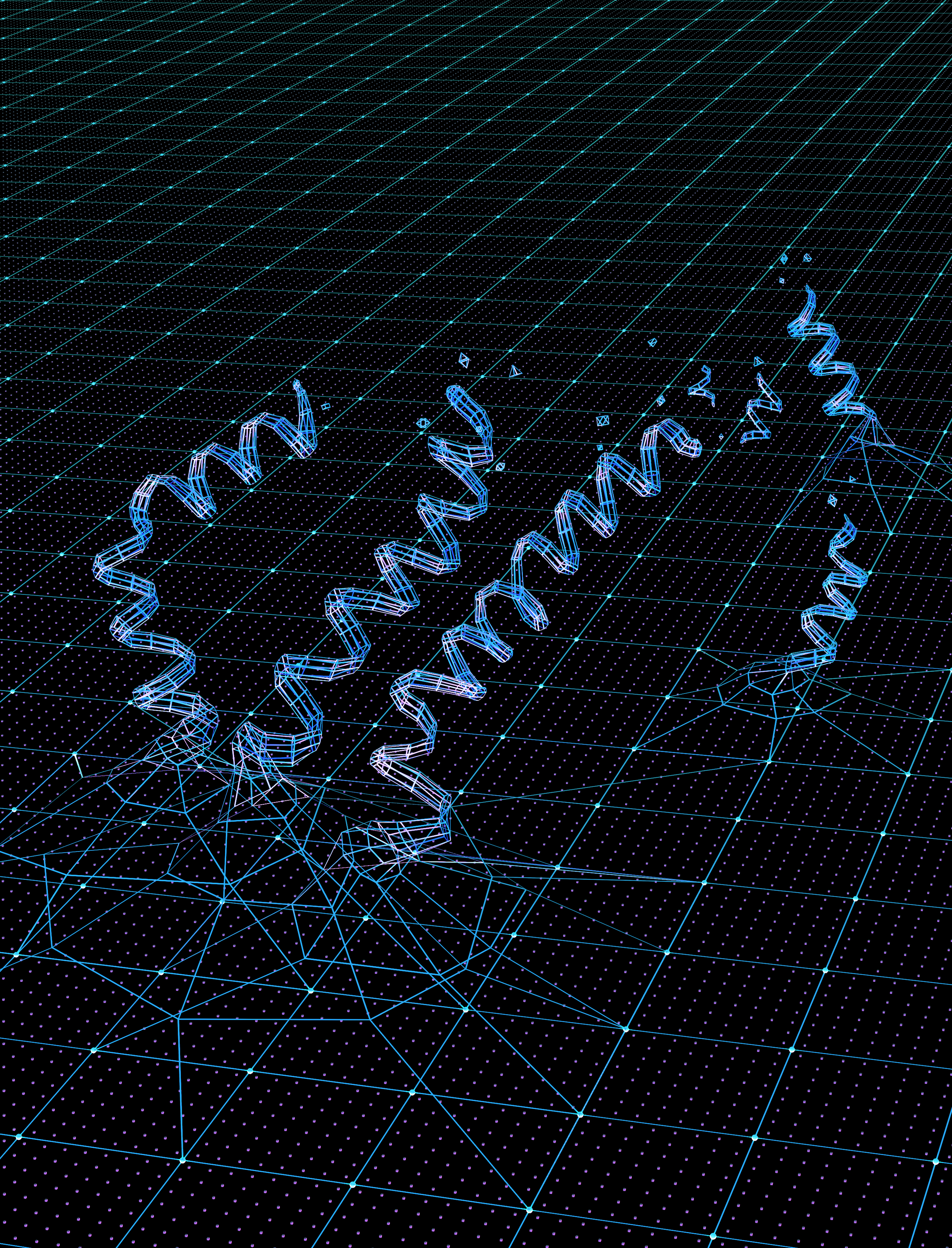
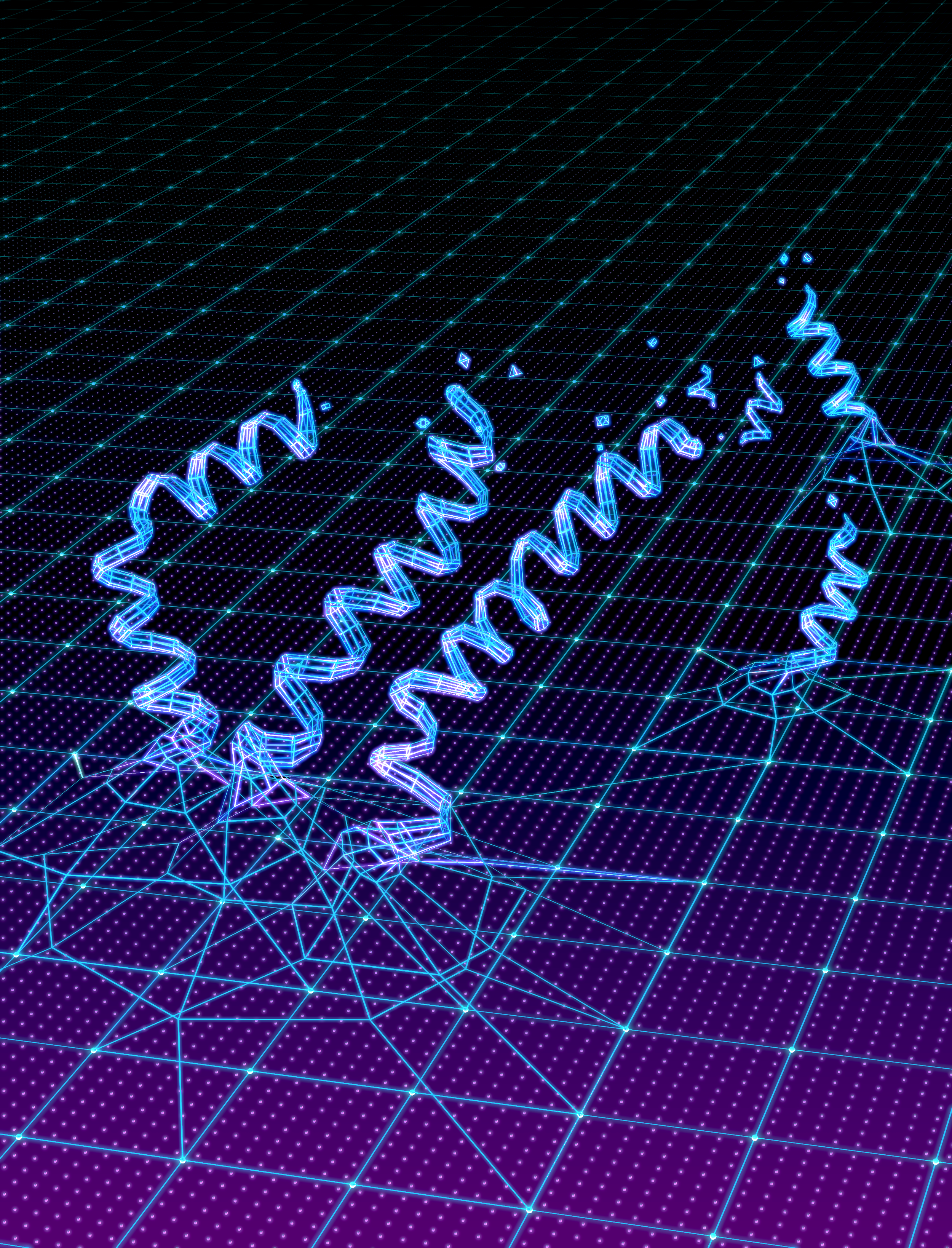
Rendering & Compositing
I set up a wireframe shader using the shading network in Maya. I created a double-sided shader where the inside of the protein coil would be rendered in one colour, while the outside of the coil would be rendered in a different colour to give the illusion of three-dimensionality. I then rendered the scene in separate layers to composite in Photoshop, where I added glow, and colour gradients to emphasize the foreground and fade out the background. I added the final text elements in Adobe Illustrator.